Many people have found remote interactions awkward or difficult in remote life.
We've all found different ways to cope. I turn closed-captions on during Hangout meetings, I can read and screenshot what I couldn't capture otherwise.
Spatial audio also offers new options.
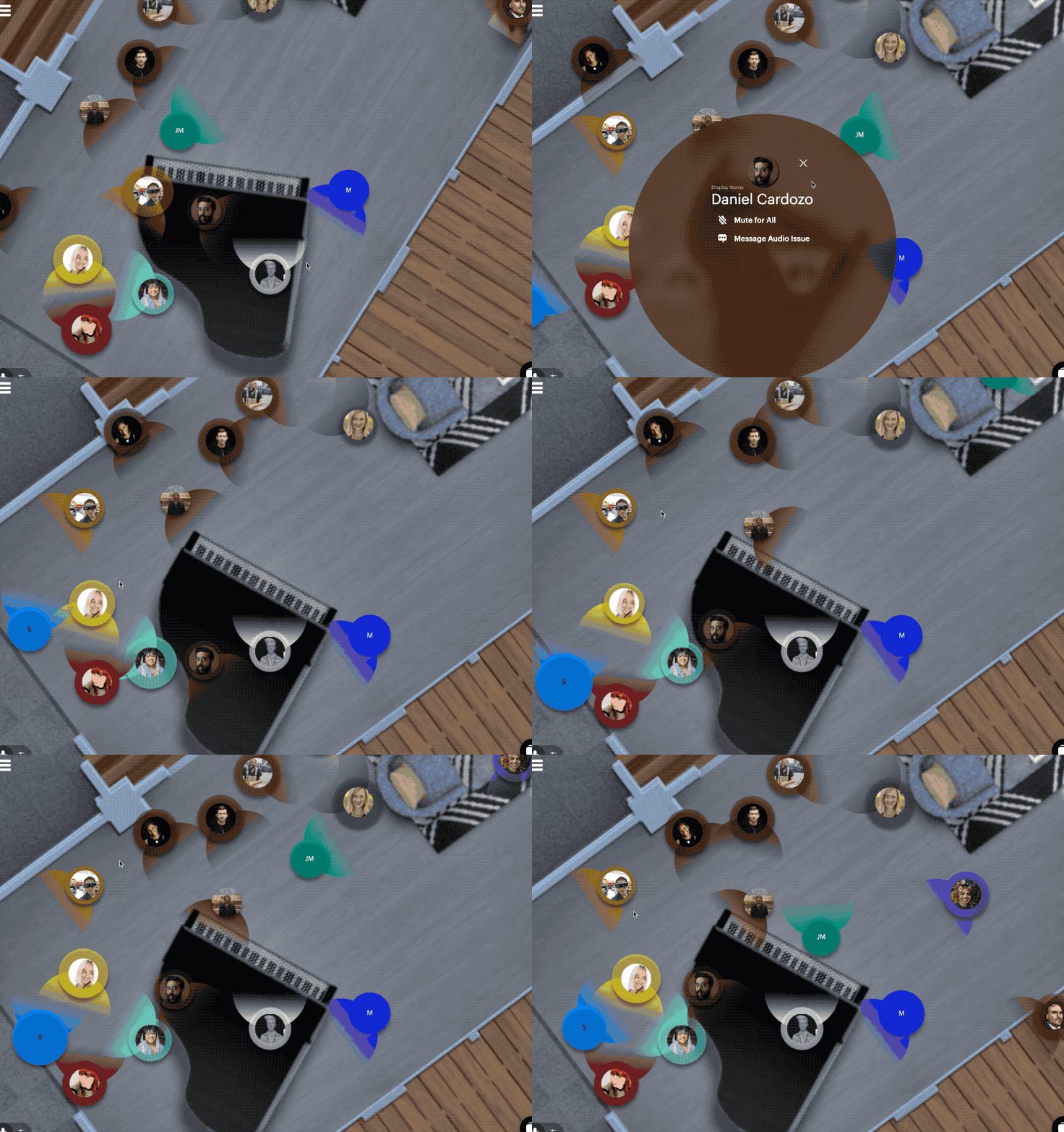
I finally met people who I follow on Twitter, "in-person" or in a spatial format during an ice-cream social on High-Fidelity, courtesy @EstellaTse.
WEIRDNESS of Hi-Fi:
- WASD rotates the world rather than the camera, making orientation unintuitive compared to standard mapping applications
- This approach mirrors early AR systems like Metaio (acquired by Apple)
- Zoom functionality feels unnatural or inverted
- Avatars as simple round bubbles lack distinctiveness; those with photo avatars appeared more approachable
- Spatial audio cone creates sensitivity issues — users may feel uncomfortable walking too far from groups or become fatigued by audio proximity mechanics
PROS of Hi-Fi:
- Audio issue notifications prevent the awkwardness of muting participants
- Spatial design enables noclip traversal through walls without physics constraints
- Maintained social dynamics — the host checked on participants' wellbeing
- Facilitated organic, multi-group conversations impossible in traditional video calls
- Enabled reconnection with mentors and professionals from MIT Hack Reality, Microsoft, and Magic Leap
The experience proved less draining than anticipated. The platform enables numerous conversations and emergent interactions that standard group video calls cannot support.
Give High-Fidelity a try. Let's figure something out better than walkie-talkies with TVs.